That Unexpected Text Could Be a Scam - Here's What to Watch For
By Taylor Bennett. Aug 25, 2026
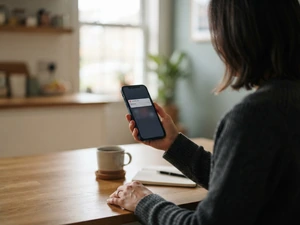
It Can Begin With a Completely Ordinary Text
The message may say there is a package waiting for you, a suspicious charge on your bank account or an unpaid highway toll.
It may look routine enough that clicking the link feels almost automatic.
Federal consumer-protection officials say that moment is exactly what scammers are counting on.
The Federal Trade Commission reported that consumers said they lost $470 million to scams that began with text messages in 2024, more than five times the amount reported in 2020. The FTC cautions that reported losses represent only a portion of the actual harm because many fraud cases are never reported.
And the problem has not disappeared. In a May 2026 warning, the FTC said text messages were the most commonly reported way scammers contacted consumers during the previous year.
The individual stories change. The strategy often does not.
Someone gets your attention, creates urgency and tries to make you act before you have time to check whether the message is real.
Some of the Messages Look Almost Boring
The FTC says package-delivery messages were the most frequently reported type of text scam in its 2024 data.
A message might claim that a package cannot be delivered until a small fee is paid. The link may lead to a page designed to resemble a legitimate delivery service.
But the small payment is not necessarily the real objective. Consumers have reported entering credit-card or even Social Security information into fraudulent websites.
Other common schemes begin with fake bank fraud alerts.
A person may receive a text claiming that an unfamiliar purchase has appeared on an account. The message encourages the recipient to reply or call immediately.
That apparent attempt to protect the victim can instead become the opening for a scammer to gain trust.
The FTC has also highlighted fake job offers, bogus unpaid-toll notices and seemingly innocent “wrong number” messages among common approaches.
Urgency Is Part of the Trap
The details can vary dramatically, but federal officials say many scams rely on recognizable pressure tactics.
One is unexpected contact.
Another is urgency.
A third is an unusual or highly specific demand for payment.
The FTC warns that scammers frequently want people to act before checking the story independently. Some instruct victims to use gift cards, wire transfers, cryptocurrency, payment applications or other methods that can make recovering the money difficult.
The Federal Bureau of Investigation has issued similar warnings about “smishing,” the term used for phishing attempts delivered through SMS text messages.
The FBI advises consumers not to click links in unsolicited texts and to independently find the legitimate phone number or website of the company supposedly contacting them.
That means a text claiming to come from a bank should not be verified by calling the number contained in the suspicious text itself.
Instead, consumers can use the number printed on a bank card, an official app or a website they already know is legitimate.
Technology Can Make Impersonation More Convincing
The threat is no longer limited to badly written messages from obviously fake accounts.
The FBI disclosed in 2025 that malicious actors had used text messages and AI-generated voice messages while impersonating senior U.S. officials.
According to the bureau, those campaigns attempted to establish trust and then move targets to other messaging platforms or obtain access to personal accounts.
The targets in that campaign were unusually prominent, but the broader lesson applies to ordinary consumers as well: familiarity is no longer proof that a message is authentic.
A recognizable name, organization or urgent scenario can be part of the deception.
The Safest Response May Be No Response
The FTC’s advice is straightforward.
Do not automatically respond to an unexpected text.
Do not follow the supplied link simply because the message appears urgent.
And do not assume that a familiar company name means the sender is legitimate.
Instead, independently contact the organization the message claims to represent.
Suspicious texts can also be reported through a phone’s junk-reporting feature or forwarded to 7726, which spells SPAM on a telephone keypad.
The scam may begin with only a few words on a phone screen.
What happens next often depends on whether the recipient reacts immediately - or stops long enough to verify who is really on the other end.
References: Consumer Protection Data Spotlight: Top Text Scams of 2024 | Is That Unexpected Text a Scam? | Spoofing and Phishing

The Truth In Facts team was assisted by generative AI technology in creating this content
Trending