What Happened to Lizzie Borden's Mother Before the Murders?
By Jordan Reyes. Sep 23, 2026
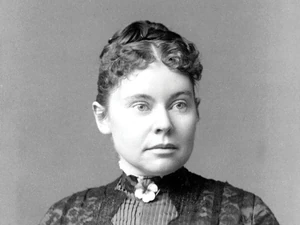
Lizzie Borden in an 1890 portrait. Credit: Unknown photographer / Wikimedia Commons. Public domain
Decades before the murders that made the Borden family infamous, Lizzie Borden experienced a loss she later said she could not remember. Her biological mother, Sarah Borden, died in 1863 when Lizzie was still a toddler.
Sarah’s death left Andrew Borden raising Lizzie and her older sister Emma. Two years later, he married Abby Gray, beginning the family arrangement that would remain in place until Andrew and Abby were killed inside their Fall River, Massachusetts, home in 1892.
The renewed attention comes as Netflix’s “Monster: The Lizzie Borden Story” has brought the case back into popular conversation. But the real family history began long before the murders.
Who Was Sarah Borden?
Sarah Morse married Andrew Borden on Christmas Day in 1845, according to reporting cited by People and Oxygen. The couple had three daughters: Emma, Alice and Lizzie.
Alice died as a small child. Lizzie was born in 1860, and Sarah died about three years later at age 39 from health complications described in historical reporting as uterine congestion and spinal disease.
Lizzie later testified during an 1892 inquest that she had been about two and a half when her mother died and had no memory of her. Emma, who was much older, carried more direct memories of Sarah and later remained a central figure in Lizzie’s life.
Oxygen reported that historical accounts describe Sarah asking Emma to care for her younger sister as Sarah’s health declined. That relationship helped shape the sisters’ closeness for years afterward.
Abby Borden Entered the Family Two Years Later
Andrew married Abby Gray in June 1865. Lizzie and Emma then grew up with Abby as their stepmother, but Lizzie later described the relationship in carefully qualified terms.
During her inquest testimony, Lizzie said she and Abby were friendly but did not describe the relationship as fully maternal. She also testified that she had stopped calling Abby “mother” several years before Abby’s death and instead called her “Mrs. Borden.”
The change followed a family disagreement involving money and property connected to Abby’s relatives, according to historical accounts summarized by People, Oxygen and CBS reporting cited in those pieces.
That financial tension became one part of the public story surrounding the Borden household. It did not prove who killed Andrew and Abby, but it helped explain why investigators and later historians scrutinized the family’s relationships so closely.
The Family Tension Became Part of a Murder Investigation
Andrew and Abby Borden were killed in their home on Aug. 4, 1892. Lizzie was charged with their murders and stood trial the following year.
Prosecutors relied heavily on circumstantial evidence and family conflict. The case became a national sensation, but a jury acquitted Lizzie in 1893.
No one else was convicted of the murders, and the case remains officially unsolved. Lizzie maintained her innocence and later moved with Emma to a larger home in Fall River.
Sarah Borden’s Death Came Long Before the Crime That Defined the Family
Because Lizzie became famous for the deaths of her father and stepmother, Sarah Borden is often a smaller part of the story. Yet Sarah’s death changed the structure of the family before Lizzie was old enough to remember it.
Her absence was followed by Andrew’s marriage to Abby, the blended household Lizzie later described as complicated, and eventually the unresolved murders that have kept the Borden name in public memory for more than a century.
What Happened After Lizzie Was Acquitted
After the 1893 acquittal, Lizzie and Emma inherited from their father and moved to a larger home in Fall River. The sisters later became estranged, and Lizzie lived there until her death in 1927.
The acquittal ended the prosecution but not public fascination with the case. Modern retellings continue returning to the family’s relationships because so much of the evidence discussed at trial was circumstantial. That makes Sarah’s earlier death relevant not as a clue to the murders, but as part of the family history that shaped the household Lizzie later described under oath.
The new Netflix dramatization has renewed interest in separating that history from fictional additions. The documented facts are simpler: Sarah died when Lizzie was a small child, Abby later became her stepmother, and Lizzie acknowledged strain in that relationship years before the killings.
References: People - What Happened to Lizzie Borden’s Biological Mother? | Oxygen - What Happened to Lizzie Borden’s Biological Mother Sarah Borden?

The Truth In Facts team was assisted by generative AI technology in creating this content
Trending